
- Flooring
How Do You Know When to Replace Carpet? 7 Signs Butte Homeowners Should Not Ignore
October 13, 2026

If your carpet has been down for a decade or more and you are staring at it wondering whether it needs a deep clean or a full replacement, you are not alone, and you are not wrong to want a straight answer before you spend money either way. Not every tired-looking carpet needs to go. Not every problem can be cleaned away either. Here are seven physical signs you can check yourself, with an honest verdict on whether cleaning can fix each one or whether replacement is the only real option. The team at Pierce Carpet Mill Outlet at 800 Dewey Blvd gives Butte homeowners this same honest read every day. Call (406) 494-3313 or stop by with photos before you spend a dollar on either option.
Key Takeaways
- Carpet typically lasts 5 to 15 years depending on fiber, traffic, and padding quality. Age alone is not a reliable replacement trigger — the physical condition of the carpet and pad matters more than the calendar.
- Delamination (backing separation) and failed padding are the two clearest signs that cleaning cannot fix. Both are structural failures, not surface problems.
- Matting, mild odors, and surface stains can often be revived with professional cleaning. Persistent odor that returns within days of a thorough cleaning usually means it has penetrated the padding or subfloor, where cleaning cannot reach.
- A simple test for most of these signs: does professional cleaning meaningfully improve the problem? If yes, cleaning was the right call. If no, replacement is the more practical path.
- Pierce Carpet Mill Outlet at 800 Dewey Blvd in Butte gives an honest, no-pressure read on whether your carpet needs cleaning, repair, or replacement — free, before you commit to anything.
How Long Does Carpet Actually Last?
Most carpet lasts 5 to 15 years, depending on fiber type, traffic level, padding quality, and how consistently it has been maintained. Quality nylon in a moderate-traffic room can approach the top of that range with proper care. Polyester and olefin in high-traffic areas often show hard-replace signs closer to the 5 to 8 year mark.
Here is the part most guides skip: age by itself is not a reliable trigger. A well-maintained 10-year-old nylon carpet with quality padding can still have real service life left. A poorly maintained 5-year-old polyester carpet in a high-traffic hallway can already show structural failure. The physical signs below matter more than the number of years since installation.
What Are the 7 Signs Your Carpet Needs to Be Replaced?
Each sign below comes with an honest verdict: can professional cleaning fix it, or is replacement the only real path forward?
1. Matting and flattening that does not spring back.
High-traffic paths, like the route from your kitchen to your living room, naturally compress carpet fiber over years of use. The test: after a professional hot water extraction and grooming, does the pile lift and regain some of its original texture? Mild to moderate matting often responds well to this treatment. If the fiber has lost its structural resilience entirely and stays flat even after cleaning, the fiber itself has broken down and cleaning will not bring it back.
Verdict: Often fixable with professional cleaning. Replace only if cleaning shows no meaningful improvement.
2. Persistent odor that survives professional cleaning.
Mild, everyday odors typically respond to a thorough professional cleaning. An odor that returns within days of a proper cleaning, especially a musty or pet-related smell, usually means it has soaked past the fiber and into the padding, backing, or subfloor, areas that surface cleaning cannot reach.
Verdict: Try professional cleaning first. If the odor returns quickly, replacement is the effective fix, since padding and backing contamination cannot be cleaned out.
3. Delamination (the backing is separating from the fiber).
This shows up as bubbling, wrinkling, or a section that will not lie flat even after professional stretching. Delamination is a structural failure of the carpet’s construction, not a surface issue, and it does not respond to cleaning or stretching.
Verdict: Not fixable with cleaning. Replacement is the only real option once delamination is confirmed.
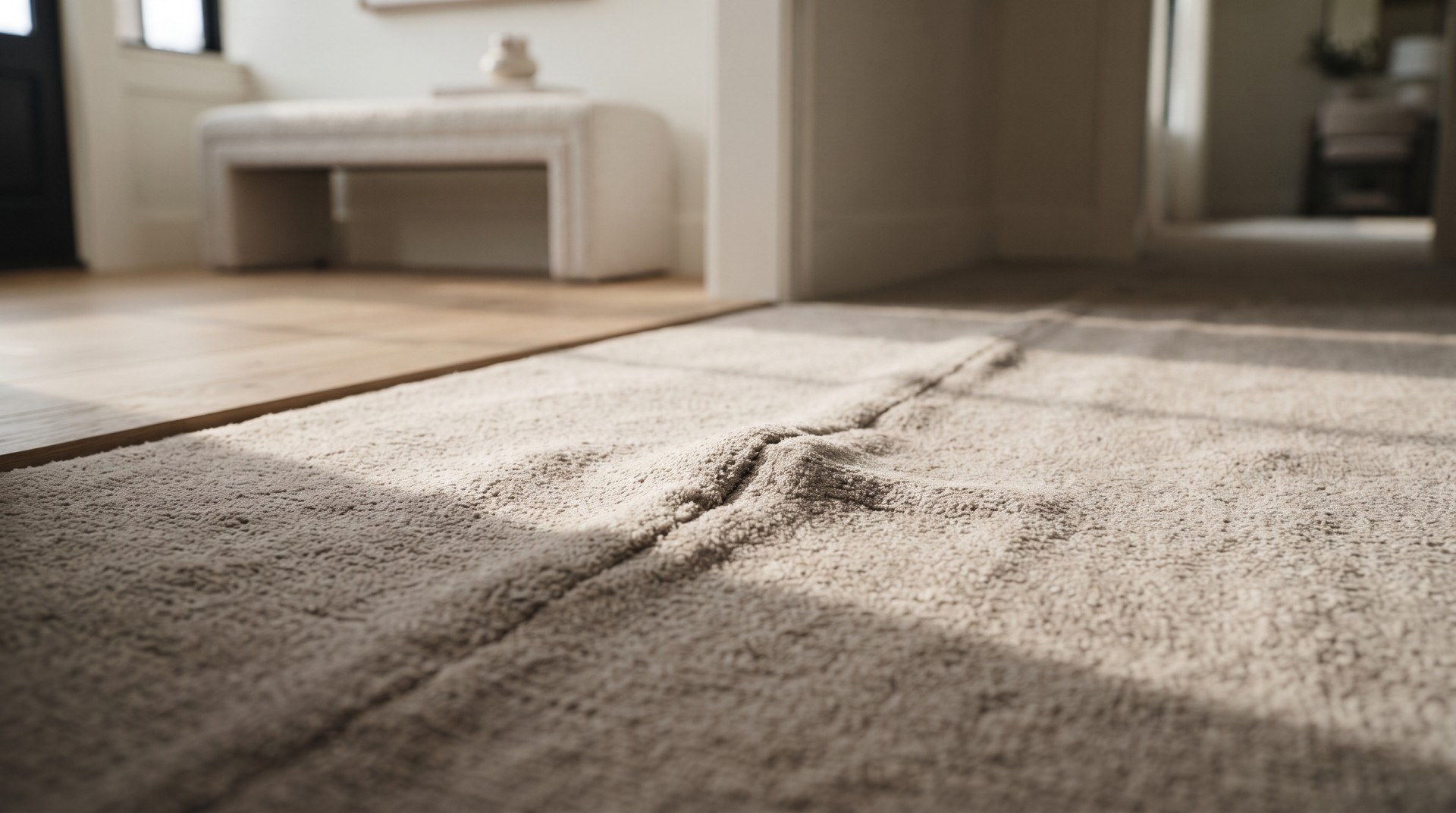
4. Padding that has broken down beneath a still-decent-looking carpet.
This is the sign most homeowners miss because they are only looking at the visible fiber. Signs of failed padding include an uneven walking surface, wrinkles that a professional stretch does not resolve, and a crinkling sound underfoot. Padding degrades independently of the carpet above it, and once it fails, it accelerates wear on the carpet as well.
Verdict: Not fixable with cleaning. If padding has failed, plan for replacement of both the pad and the carpet, since a worn carpet placed over new padding rarely performs well and installing new carpet over old, failed padding is not recommended.
5. Visible tears, fraying, or seams coming apart.
Small, isolated tears or fraying can sometimes be patched or repaired by a professional, particularly if they are contained to a small area and the surrounding carpet is in good condition. Extensive fraying, multiple tears, or seams unraveling across a large area signal that the carpet’s structural integrity is compromised beyond a simple patch.
Verdict: Small isolated damage may be repairable. Widespread tearing or seam failure means replacement is the more practical and safer option, especially on stairs or high-traffic walkways where damage is also a tripping hazard.
6. Stains that remain visible after professional cleaning.
Most surface stains, even stubborn ones, respond well to professional cleaning techniques. A stain that remains clearly visible after a proper professional cleaning has likely penetrated below the surface fiber, or involves a substance (certain dyes, bleach) that permanently altered the fiber color.
Verdict: Try professional cleaning first for isolated stains. Permanent, deep-set staining across multiple areas is a legitimate replacement trigger.
7. Water damage or musty smell suggesting mold.
Carpet exposed to standing water for more than about 72 hours is at meaningful risk for mold and mildew growth within the padding and subfloor, which is a genuine health hazard, not just an aesthetic issue. A musty smell that appears after any water exposure event, even a smaller one, deserves prompt attention.
Verdict: Not fixable with surface cleaning if mold is present or suspected. Replacement of the carpet, and often the padding, is the appropriate response to protect indoor air quality.
| Sign | Can cleaning fix it? | What confirms replacement is needed |
| Matting / flattening | Often, if mild to moderate | No improvement after professional cleaning and grooming |
| Persistent odor | Sometimes, for mild odors | Odor returns within days of thorough professional cleaning |
| Delamination | No | Bubbling or separation confirmed; not a cleaning issue |
| Padding failure | No | Crinkling, unevenness, wrinkles that stretching doesn’t fix |
| Tears / seam failure | Small areas sometimes repairable | Widespread fraying or seam separation |
| Deep stains | Often, for isolated surface stains | Visible after proper professional cleaning |
| Water damage / mold risk | No | Exposure over ~72 hrs or any musty smell after water event |
“Robyn was a superb salesperson! Very knowledgeable, encouraging and helpful. Will be back soon!”
Butte Homeowner, Butte — In-store consultation (Robyn Alley, Residential Flooring Specialist)
Should You Clean, Repair, or Replace? How to Decide
Here is the practical order of operations that avoids both unnecessary spending and prolonging a problem that will not go away:
- Start with professional cleaning for matting, mild odor, and surface stains. This is the least expensive path and often solves the problem entirely. It also gives you real information: if cleaning does not meaningfully improve the carpet, you now know the issue is structural, not surface-level.
- Consider repair for small, isolated tears, snags, or a single failing seam, provided the surrounding carpet is in good condition and a matching remnant is available.
- Move to replacement when you confirm delamination, failed padding, odor that survives cleaning, water/mold exposure, or damage that is widespread rather than isolated.
- Get a second opinion if you are unsure. A reputable flooring team should be willing to tell you honestly if your carpet has life left, not just quote a replacement.
Pro Tip from the Pierce Carpet Mill Outlet Butte team:
We would genuinely rather tell a Butte homeowner their carpet has a few good years left than sell them a replacement they do not need yet. Bring a few photos in, or let us take a look during a free in-home measure, and we will give you our honest read. If it is a cleaning problem, we will tell you that too.
“It was a pleasure doing business with Jodi Reynolds today at Carpet Mill Outlet. She’s so helpful and listened to me — got exactly what I needed. She’s good at checking out also. I’ll ask for her again.”
Cathy R., Butte — In-store carpet selection (Jodi Reynolds, Residential Flooring Specialist)
Frequently Asked Questions
How long does carpet typically last before it needs replacing?
Most carpet lasts 5 to 15 years depending on fiber type, traffic level, padding quality, and maintenance. Quality nylon in a moderate-traffic room can approach the higher end of that range; polyester and olefin in high-traffic areas often need replacement closer to the 5 to 8 year mark. Age alone is not a reliable trigger for replacement. A well-maintained carpet at year 10 can still have real life left, while a poorly maintained carpet can show hard-replace signs well before then.
Can matted or flattened carpet be fixed with cleaning?
Sometimes. Mild to moderate matting in high-traffic paths can often be revived with professional hot water extraction and grooming, which lifts and re-fluffs the fiber. Once the fiber has lost its structural resilience entirely and no longer springs back after cleaning, no amount of additional cleaning will restore it. The test is straightforward: if a fresh professional cleaning brings the pile back to something close to its original texture, cleaning was the right call. If it does not, replacement is the more practical path.
What is carpet delamination and does it mean I need to replace the carpet?
Delamination is when the carpet’s backing separates from the fiber layer, often visible as bubbling, wrinkling, or a section that lifts and does not lie flat even after professional stretching. Delamination cannot be fixed with cleaning and generally cannot be repaired; it is a structural failure of the carpet system. If you notice bubbling or separation that a professional stretch does not resolve, replacement is the appropriate next step.
How do I know if it’s the carpet or the padding that needs replacing?
Signs of failed padding include an uneven walking surface, visible wrinkles that do not respond to professional stretching, and a crinkling sound underfoot as you walk. Padding degrades independently of the visible carpet fiber, so a carpet that still looks reasonably good on the surface can still be sitting on padding that has broken down. Because padding failure accelerates wear on the carpet above it, replacing padding without addressing an already-worn carpet is rarely the full fix. A professional assessment can tell you whether the padding, the carpet, or both need replacing.
Should I clean or replace carpet with a persistent odor?
It depends on how deep the odor has penetrated. Mild odors from everyday living often respond well to professional deep cleaning. An odor that returns within days of a thorough professional cleaning, especially a musty or pet-related smell, usually means it has penetrated into the padding, backing, or subfloor, where cleaning cannot reach. At that point, replacement is the more effective and hygienic solution, particularly if mold or mildew growth is suspected.
Get an Honest Read at 800 Dewey Blvd
Before you spend money on either a cleaning or a replacement, get a second set of eyes on it. Pierce Carpet Mill Outlet is at 800 Dewey Blvd in Butte, open Monday through Friday 8:30 a.m. to 6:00 p.m. and Saturday 9:00 a.m. to 5:00 p.m. Robyn Alley, Jodi Reynolds, and the Butte team will give you a straight answer, whether that means cleaning, repair, or replacement. Call (406) 494-3313 or book a free in-home measure if replacement turns out to be the right call.
Pierce Carpet Mill Outlet is part of Montana’s largest family-owned flooring network, serving Butte since 1924 and a member of the National Floorcovering Alliance. If it is time for new carpet, browse in-stock and special-buy carpet for faster turnaround, and use the Roomvo room visualizer to preview new options in a photo of your own room.

You Might Also Like
-

- Flooring
October 7, 2026
What Is the Best Waterproof Flooring for Kitchens? A Bozeman Buyer’s Guide
-
- Flooring
October 6, 2026
Nylon vs. Polyester Carpet: Which Fiber Lasts Longer in a Busy Montana Home?
-

- Flooring
September 14, 2026
Engineered vs. Solid Hardwood: Which Belongs in a Bozeman Home?
Looking for Great Flooring Deals & Expert Service?
Save Big With Montana’s Trusted Flooring Experts