
- Flooring
What Is the Best Flooring for Older Homes with Uneven Floors? A Butte, Montana Guide
July 20, 2026
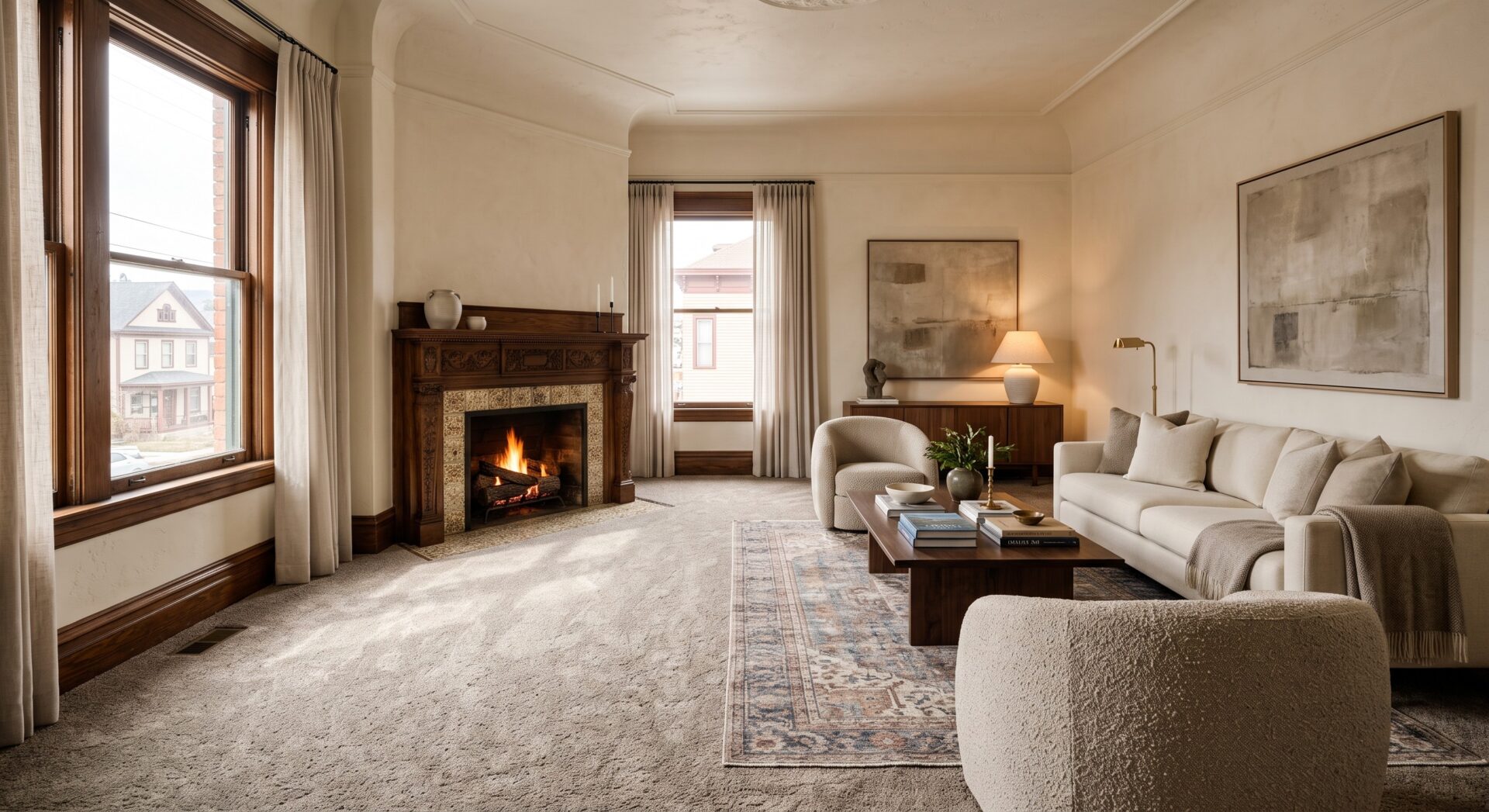
Set a marble on the floor of a century-old house in Uptown Butte and it will probably roll. Nearly 6,000 buildings stand in the Butte-Anaconda National Historic Landmark District, and very few of them still have a level floor anywhere in the house. If a contractor just told you your floors are too uneven for new flooring, take a breath. You have more options than you think, and most of them do not start with a terrifying subfloor project. The team at Pierce Carpet Mill Outlet measures floors like yours every week. Schedule a free in-home measure at (406) 494-3313 before you assume the worst.
Key Takeaways
- Carpet over a quality cushion is the most forgiving flooring for uneven floors in older Butte homes, hiding waves and dips that would break a click-lock floor.
- Most click-lock LVP and laminate manufacturers require a subfloor flat to within about 3/16 inch over 10 feet. Outside that tolerance, floating joints rock, peak, and separate.
- Slope and flatness are different problems. New flooring follows a slope; flatness is what decides which products can be installed.
- Butte’s heated winter air routinely drops below 30 percent indoor humidity, which makes solid hardwood a risky pick in the city’s historic housing stock.
- Pierce Carpet Mill Outlet at 800 Dewey Blvd in Butte measures slope, flatness, and moisture separately during its free in-home measure before recommending any product.
Why Are Floors in Older Butte Homes So Uneven?
Most uneven floors in Butte come down to age, not catastrophe. The houses on the Hill and through Uptown went up between the 1880s and 1920s, during the years that made this the Richest Hill on Earth, and they were framed with rough-sawn joists that are undersized by modern standards.
A century of settling stone foundations and slowly drying lumber does the rest. Ground movement has historically affected parts of the Hill, but for most homes the cause is ordinary settling, the same thing you would find in any pre-war neighborhood, just with more elevation and drier air.
Here is the distinction that saves people money: slope and flatness are two different problems. Slope means the whole floor tilts, usually toward a settled corner. Flatness means waves, dips, and humps across the surface. New flooring follows slope without complaint. Flatness is what determines which products you can install.
Pro Tip from the Pierce Carpet Mill Outlet Butte team:
In Uptown and Walkerville homes we routinely measure a full inch of slope across a room that has less than a quarter inch of flatness variation. That floor needs no leveling at all for carpet, and only minor prep for glue-down vinyl. Ask any estimator to measure slope and flatness separately, because quotes that lump them together tend to over-prescribe leveling.
What Is the Best Flooring for Uneven Floors in an Older Home?
Carpet over a quality cushion is the best flooring for uneven floors in most older Butte homes, followed by flexible glue-down vinyl. Floating click-lock floors are the least forgiving, and large-format tile is usually the wrong fight to pick with a 1910 subfloor.
Carpet. The cushion absorbs minor waves and the pile hides what the cushion cannot. At 5,500 feet with a heating season that runs into May, carpet is also the warmest thing you can put underfoot. The Shaw and Mohawk carpet inventory at the Butte outlet is in stock, which matters when your install window is short.
Honestly, carpet is the most underrated answer for older Butte bedrooms. The industry spent a decade convincing everyone that LVP belongs in every room of every house. On a wavy 1910 subfloor, it does not.
Sheet vinyl. It flexes with a sloping floor, which makes it a practical pick for older kitchens and baths. The honest tradeoff: vinyl telegraphs texture, so bumps, ridges, and fastener heads will show through the surface unless the subfloor gets a skim coat first. It hides slope well and hides texture poorly.
Glue-down LVP. Because every plank is fully adhered, there are no floating joints to rock or separate, and flexible glue-down vinyl tolerates minor irregularity better than rigid-core click products. It still needs reasonable prep, but the bar is lower.
Click-lock LVP and laminate. These are not off the table, but they are the strictest. Most manufacturers require the subfloor flat to within about 3/16 inch over 10 feet. Outside that tolerance the joints rock under foot traffic, edges peak, and the locking system can separate, which also voids the warranty. With proper prep they perform well, even in old houses.
Think twice about: nail-down solid hardwood and large-format tile. Solid wood fights both the old plank subfloor and Butte’s dry winters, and big tiles over a flexing structure produce lippage and cracked grout.
| Flooring type | Forgiveness on uneven floors | Where it fits in an older Butte home |
| Carpet + cushion | Highest. Hides waves and minor dips | Bedrooms, living rooms, stairs |
| Sheet vinyl | High for slope, low for texture | Kitchens, baths, laundry |
| Glue-down LVP | Moderate to high with light prep | Main floors, high-traffic rooms |
| Click-lock LVP / laminate | Low without prep. Flat to ~3/16 in. over 10 ft. | Any room, after flatness is corrected |
| Solid hardwood / large tile | Lowest. Demands flat, stable structure | Only after structural and flatness work |
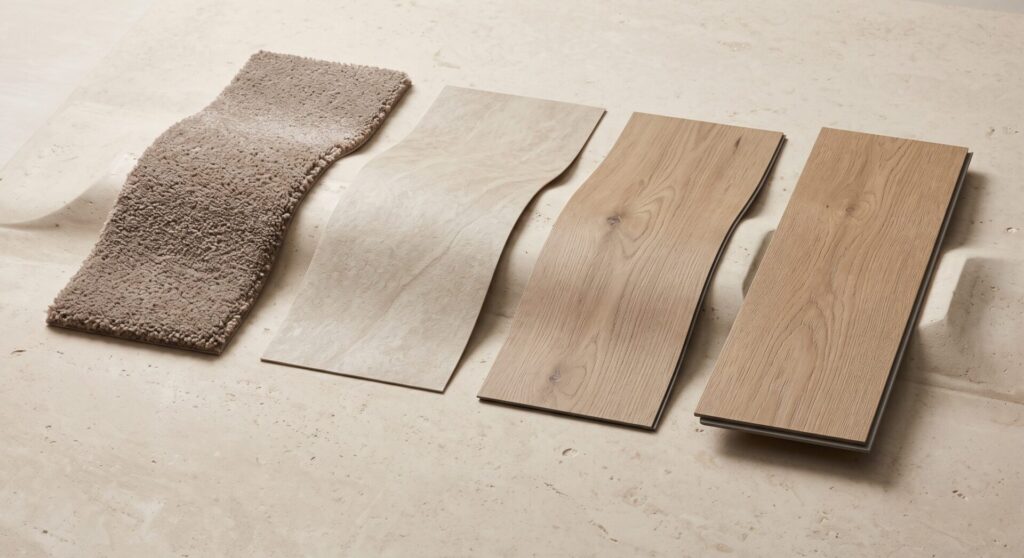
“Recently I contacted Pierce Flooring in Butte. Robyn Alley came to my home with ample samples of laminate boards. Robyn was very professional and very well educated about the products she was showing. Products were chosen and she was very knowledgeable about all aspects of the laminate. Robyn took excellent measurements and ultimately a date was set for installation. When the day arrived, the installation crew, Josh, Mike and Paul arrived on time and immediately began the process of tearing out old carpet and laying down the new laminate. They were extremely knowledgeable and replaced approximately 2,000 square feet of carpet with high quality laminate. The work was beyond reproach. The finished job was nothing less than spectacular. I recommend these gentlemen to install your new floors when you chose Pierce to do the job! Again, one thousand percent satisfied.”
Butte Homeowner, Butte – Laminate (replaced 2,000 sq ft of carpet)
What Does Subfloor Prep Involve in an Older Butte Home?
Prep ranges from nothing at all to a structural repair, and the right scope depends on whether your problem is slope, flatness, or framing. Here is the thing: most older Butte floors need far less than homeowners fear.
- Spot patching and skim coating handles isolated dips and the texture that would telegraph through vinyl.
- Self-leveling underlayment corrects flatness, not slope, and never structure. Over original plank subfloors it needs a plywood overlay and primer first so it has a stable surface to bond to.
- A plywood overlay bridges plank gaps and minor waves, and is often the single most cost-effective step before a click-lock floor.
- Framing repairs, like sistering joists or adding support posts, belong to a carpenter or structural contractor. If a slope is severe or getting worse, have it evaluated before any flooring decision.
What drives the scope in Butte specifically: how far out of flat the floor is, whether the subfloor is original planking or panel goods, and what the crawl space or basement is doing for moisture under a pre-war house.
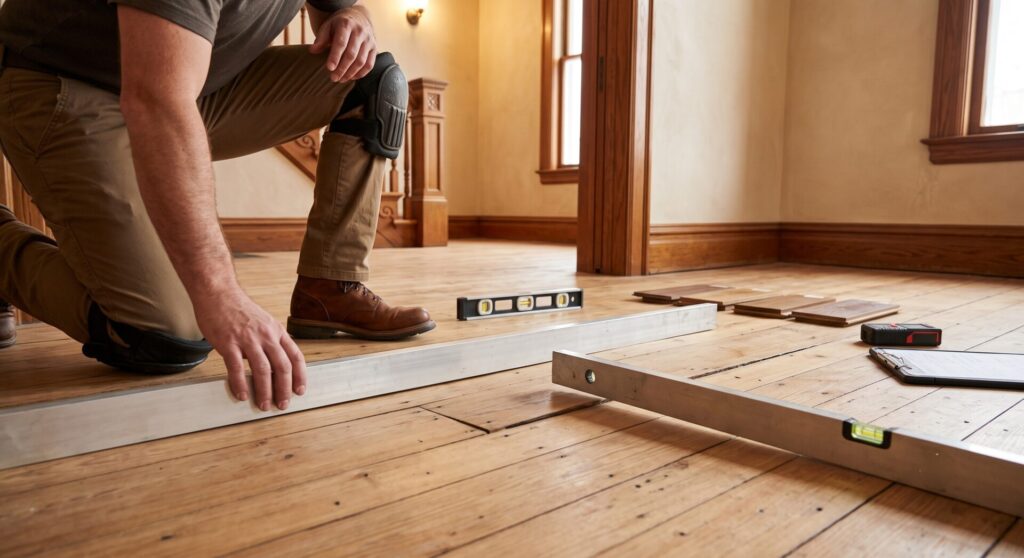
“The cheapest fix is usually picking a floor that forgives. We level when the product demands it, but we would rather see the budget go into better carpet and cushion than into leveler under a floor that never needed it.”
Pierce Carpet Mill Outlet Butte installation team
Want to know which of these your floor actually needs? Book a free in-home measure and we will measure slope and flatness separately and show you the readings before recommending anything.
How Does Butte’s Dry Climate Affect Flooring in Older Homes?
Butte’s winter air is the quiet floor-killer. Once the furnace runs, indoor humidity routinely drops below 30 percent from November into March, and every wood product in the house responds.
The National Wood Flooring Association recommends keeping wood floors between 30 and 50 percent relative humidity. Gaps that open in a solid wood floor in January and close again by June are normal movement here, not a defect. A humidifier on the furnace narrows the swing; it does not eliminate it. Engineered hardwood, like the Kahrs and Hallmark lines Pierce carries, is built in cross-grain layers specifically to shrug off these swings.
That said, the bigger maintenance issue in Butte is grit. Road sand and ice melt ride in on boots from October to April, and grit is sandpaper to every floor finish. Keep walk-off mats at each entry, vacuum more often in winter than summer, and never wet-mop vinyl or laminate; a damp mop is plenty. Long indoor winters also mean Butte floors log more wear hours per year than the same floor would in a milder climate, which is one more quiet argument for forgiving, durable products.
“They did a wonderful job on our house. Showed up a day earlier than promised and completed a day sooner. I will definitely be using them again very soon.”
Butte Homeowner, Butte – Flooring installation
How Do You Choose a Flooring Installer in Butte?
Any installer can quote a rectangle. In a 100-year-old house, you are hiring judgment, so vet for it:
- Ask whether they measure slope and flatness separately, and ask to see the numbers. A quote that lumps them together tends to over-prescribe prep.
- Ask how they check moisture. Crawl spaces and rubble-wall basements under pre-war Butte homes can push moisture into a subfloor, and skipping the test is the most common installer shortcut.
- Make sure prep is itemized in writing, not buried in a lump sum.
- Red flags: no in-person site visit, no moisture or flatness reading, and vague warranty language.
In our experience, this is where a century of local practice shows. Pierce Carpet Mill Outlet has been part of the same family-owned Montana company since 1924, sends licensed and insured installers backed by a one-year workmanship warranty, and stands behind every job through the Pierce Promise, a single point of contact for any material or installation issue. The Butte team, Matt Loeffler, Jodi Reynolds, Leah Crossman, Michelle Andrene, and Robyn Alley, works out of the Dewey Blvd showroom and measures these houses every week, and the company is a member of the National Floorcovering Alliance.
Frequently Asked Questions
Can you install new flooring over an uneven floor without leveling it first?
Yes, in many cases. Carpet over a quality cushion installs over floors that would fail a click-lock spec, and flexible glue-down vinyl tolerates minor irregularity. The deciding factor is whether your floor’s problem is slope or flatness. Slope rarely blocks an install. Flatness outside a product’s tolerance has to be corrected before floating floors go down.
What is the flatness requirement for click-lock LVP and laminate?
Most manufacturers require the subfloor to be flat within about 3/16 inch over 10 feet, and some are stricter. Always check the spec sheet for your exact product. Outside that tolerance, floating joints rock under foot traffic, edges peak, and the locking mechanism can separate, which also voids most warranties.
Will new flooring fix a sloping floor?
No. Flooring follows the structure underneath it, so a floor that tilts toward one wall will still tilt after new flooring goes in. Self-leveling underlayment corrects flatness, not slope. If a slope is severe or getting worse, have a qualified contractor evaluate the framing and foundation before you invest in new floors.
Why are the floors in my old Butte house uneven?
Mostly age. Homes built in Butte between the 1880s and 1920s sit on stone or early concrete foundations that have settled for a century, over joists that are undersized by modern standards, with rough-sawn lumber that has been slowly drying and shrinking in our semi-arid climate the whole time. It is rarely an emergency, but sticking doors or new wall cracks are worth a professional look.
Is solid hardwood a bad idea in Butte?
Not bad, but risky in older homes. Butte’s heated indoor air routinely drops below 30 percent relative humidity in winter, well under the 30 to 50 percent range the National Wood Flooring Association recommends for wood floors. Solid planks gap and can cup with those swings. Engineered hardwood handles our dry winters far better and still gives you real wood underfoot.
Get an Honest Read on Your Floor
The floor under your feet has been moving for a hundred years. The right new floor works with that history instead of fighting it. Pierce Carpet Mill Outlet is at 800 Dewey Blvd in Butte, open Monday through Saturday, no appointment needed, or call (406) 494-3313 to book a free in-home measure. Summer is the practical window: the install calendar fills before the fall rush, and warm weather makes tear-out and acclimation easier in older houses.
Before you visit, preview floors in a photo of your own room with the Roomvo room visualizer. It takes about a minute, and it is a surprisingly good way to see how a forgiving floor can still be a beautiful one.
You Might Also Like
-
- Flooring
August 16, 2026
The Best Mudroom and Entryway Flooring for Montana Winters
-
- Flooring
August 12, 2026
Best Flooring for Rental Properties in Bozeman: A Landlord’s Guide
-
- Flooring
July 29, 2026
Why Do Hardwood Floors Get Gaps in Winter? Montana’s Dry Climate Explained
Looking for Great Flooring Deals & Expert Service?
Save Big With Montana’s Trusted Flooring Experts