
- Flooring
The Best Mudroom and Entryway Flooring for Montana Winters
August 16, 2026
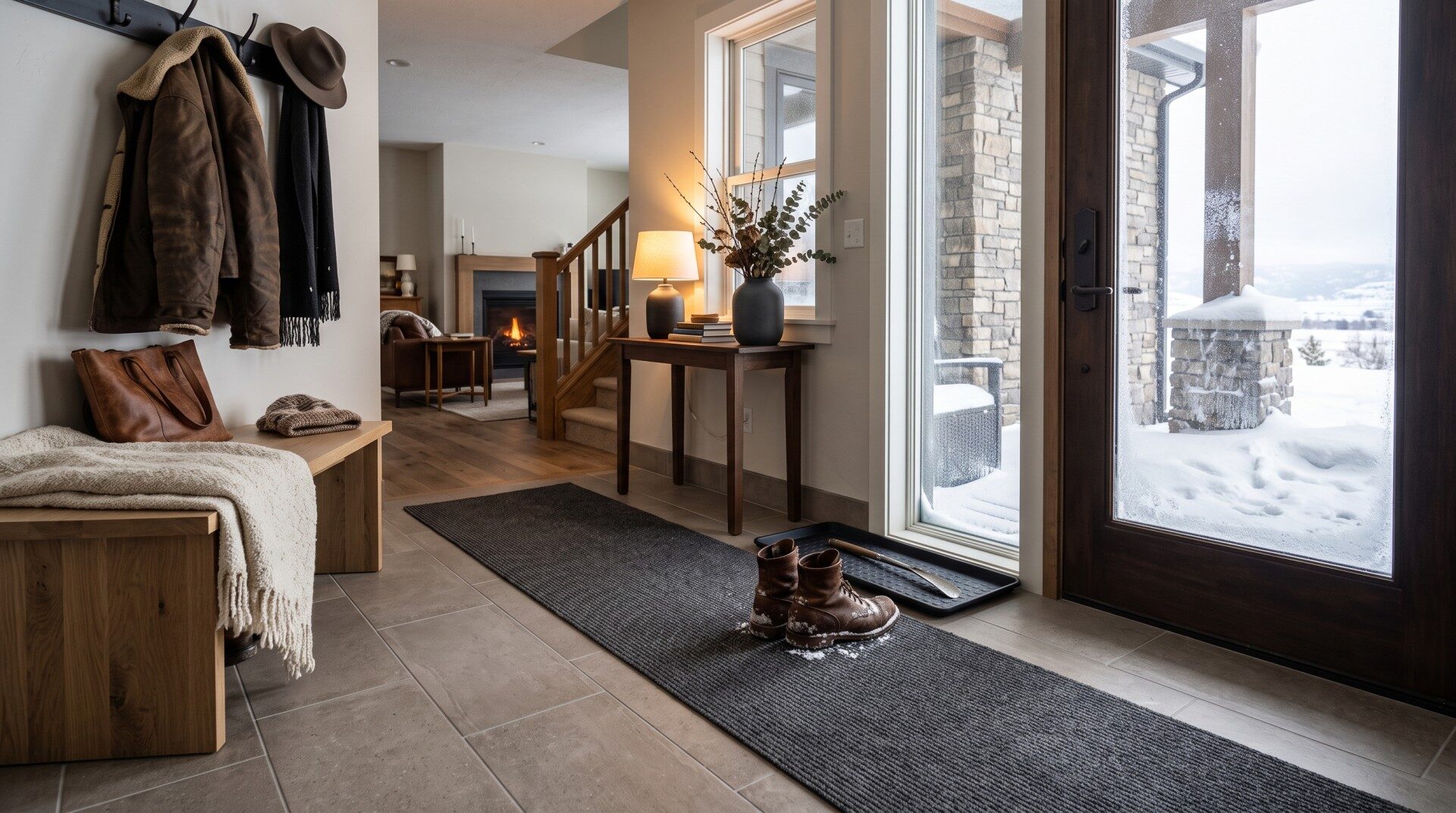
Montana has used magnesium chloride road deicers statewide since 1996. Every time a Butte resident walks in from a treated street, parking lot, or driveway between October and April, that brine rides in on boot soles — along with crushed aggregate sand that the Montana Department of Transportation applies for traction on roads where temperatures drop too low for chemicals to work. On a good Butte winter day, boots bring in salt brine. On a bad one, they bring in salt brine, sand, ice chunks, and snowpack that melts onto the floor the moment it hits the warm interior. The floor at your entry door takes the worst of it, every single day of a seven-month season. The team at Pierce Carpet Mill Outlet at 800 Dewey Blvd in Butte sees what this does to floors. Call (406) 494-3313 or stop in to talk through your entry situation before the next season starts.
Key Takeaways
- Tile and porcelain are the best entryway and mudroom flooring for Montana winters. They are impervious to road salt, magnesium chloride brine, sand abrasion, and snowmelt.
- Montana has used magnesium chloride and sodium chloride road deicers statewide since 1996. Salt tracked in on boots corrodes floor finishes, leaves abrasive residue, and causes white staining when it dries.
- Waterproof LVP with a 20-mil wear layer is a strong entryway choice in interior transition zones set back from the door. At the door itself, tile is the more durable long-term material.
- A walk-off mat system needs at least 4 to 6 feet of mat length to actually remove road salt and grit from boot soles. Short decorative mats are not effective.
- Pierce Carpet Mill Outlet at 800 Dewey Blvd in Butte offers area rug cutting and binding services — choose any commercial carpet and have it cut to the exact size your entry or mudroom requires. No big-box competitor offers this in Butte.
Why Butte Entryways Face a Tougher Test Than Most
The national conversation about mudroom flooring focuses on mud and moisture. Butte adds two ingredients that most guides do not cover: road salt chemistry and freeze-thaw cycling.
The liquid deicer pretreated on Butte streets before storms is a mixture of magnesium chloride and sodium chloride. When it dries on a floor surface, it leaves a crystalline residue that is mildly corrosive and abrasive. Every footstep grinds that residue against the floor finish. Over a winter season, that accumulation strips finish off hardwood, dulls LVP, and leaves a white haze on anything it touches. The traction sand MDT mixes with deicers adds another layer of grit — essentially fine crushed rock working like sandpaper across whatever floor lies inside the door.
The freeze-thaw cycling compounds the problem for tile. Butte temperatures in shoulder season (October, November, March, April) regularly cross the 32-degree mark multiple times per day. Every time an entry door opens, cold air contacts the floor; every time the furnace cycles, warm air dries the melt. The Tile Council of North America specifies full mortar coverage and movement joints at doorway thresholds in freeze-affected applications for exactly this reason — inadequately bedded tile cracks at grout joints when thermal expansion and contraction cycles repeatedly.
Here is the practical reality: the floor at your exterior door in Butte is not just a floor. It is the most abused surface in your home for seven months of the year, and it needs to be chosen accordingly.
What Is the Best Flooring for a Mudroom or Entryway in Montana?
Tile and porcelain are the best choice for the zone directly inside an exterior door. They are fully waterproof, chemically inert against road salt and magnesium chloride, easy to scrub clean after muddy boot traffic, and unaffected by Butte’s freeze-thaw cycling when properly installed. A 12×24 or 18×18 porcelain in a matte or textured finish gives good boot traction and hides the salt-haze residue between cleanings better than high-gloss. Seal grout annually — grout lines trap salt and grit that degrade the grout over time if left unsealed.
Installation detail matters as much as material in this application. For tile at a Butte entry, full mortar coverage (at least 95 percent contact between tile and substrate) and movement joints at the doorway threshold are required by the TCNA freeze-thaw specification. A tile that was set with minimal coverage will crack at grout joints within a few seasons of thermal cycling, regardless of product quality.
Waterproof LVP with a 20-mil wear layer is the right choice for interior transition zones. Set back from the door, where the direct snowmelt and salt-drop zone ends, waterproof LVP handles the secondary traffic well. The magnesium chloride brine carried further into the house on damp boot soles is mildly corrosive; a 20-mil wear layer is the right minimum for this kind of chemical exposure. Always vacuum the entry area before mopping — dragging grit during wet cleaning causes micro-scratches that accumulate across a season.
Hardwood in a direct entry zone is not recommended for Butte homes. The combination of salt moisture, sand abrasion, and freeze-thaw cycling degrades hardwood finishes quickly and causes warping at board edges and joints. If you have hardwood in your main floor and want to protect it at the entry transition, a well-secured area rug or a tile or LVP transition zone is the right solution. The Pierce Butte area rug and binding service can cut and bind a custom rug to the exact dimensions of your entry — something no big-box competitor offers.
| Flooring type | Performance at Butte entry door | Key consideration |
| Porcelain and ceramic tile | Best. Salt-proof, waterproof, durable through freeze-thaw | Full mortar coverage; TCNA freeze-thaw spec; annual grout sealing |
| Waterproof LVP (20-mil) | Very good in transition zone inland from door | Vacuum before mopping; 20-mil minimum for salt exposure |
| Custom-bound area rug | Excellent as secondary mat layer over hard floor | Pierce Butte binds carpet to exact size; use non-slip pad |
| Sheet vinyl | Acceptable in secondary zones where appearance is secondary | Vulnerable at seams; not ideal where direct ice/salt contact occurs |
| Hardwood (solid) | Not recommended at direct entry | Salt moisture + sand abrasion + freeze-thaw = rapid finish damage |
| Laminate | Not recommended at entry door | Core swells at joints under repeated moisture exposure |
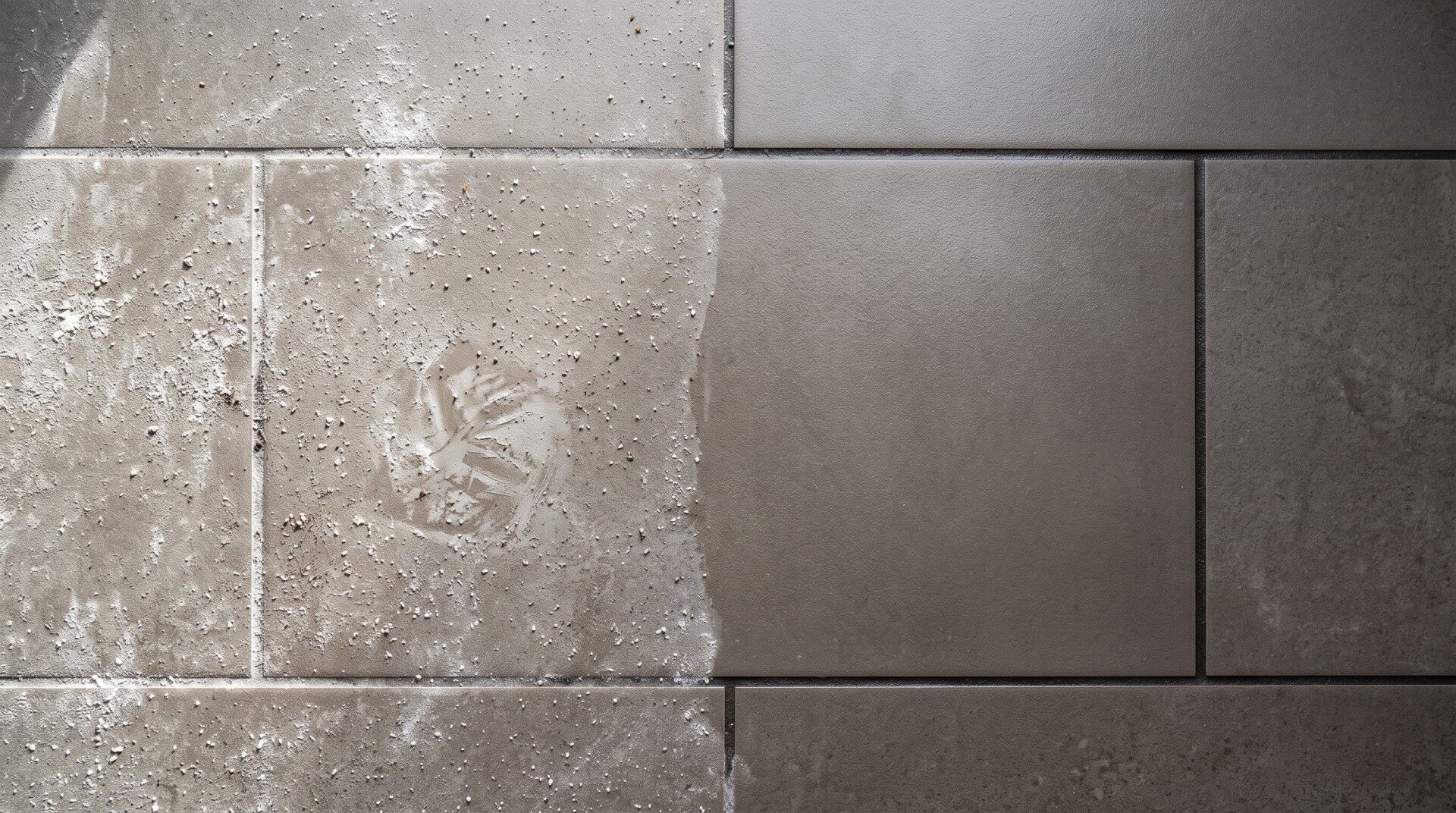
“Recently I contacted Pierce Flooring in Butte. Robyn Alley came to my home with ample samples of laminate boards. Robyn was very professional and very well educated about the products she was showing. Products were chosen and she was very knowledgeable about all aspects of the laminate. Robyn took excellent measurements and ultimately a date was set for installation. When the day arrived, the installation crew, Josh, Mike and Paul arrived on time and immediately began the process of tearing out old carpet and laying down the new laminate. They were extremely knowledgeable and replaced approximately 2,000 square feet of carpet with high quality laminate. The work was beyond reproach. The finished job was nothing less than spectacular.”
Butte Homeowner, Butte – Laminate installation, approx. 2,000 sq ft (Robyn Alley + crew Josh, Mike & Paul)
How Do You Set Up a Mat System That Actually Works?
A mat at the door is the single most effective tool for protecting every floor beyond the entry zone. The problem is that most residential mats are too short to actually work.
A walk-off mat system needs at least 4 to 6 feet of mat contact length for most adults to fully step off both boot soles before reaching the main floor. A standard 18-by-30-inch doormat — the kind found in every big-box home section — provides about one and a half steps of contact. It looks helpful. It is not particularly effective at removing road salt and sand.
What works in a Butte home:
- Outdoor mat. A coarse-bristle or boot-scraper mat immediately outside the door to remove the heaviest grit and ice chunks before boots enter. This is where the large, chunky salt granules and sand drop off.
- Indoor walk-off mat. A second absorbent mat inside the door, at least 3 to 4 feet long, to absorb snowmelt and carry the salt water that passed the outdoor mat. Together, the two mats extend the effective walk-off zone to 4 to 6 feet or more.
- Secure the mats. A non-slip pad under any mat on a hard floor is not optional. An unsecured mat on tile or LVP is a sliding hazard, especially when it is wet and heavy with snowmelt.
- Replace mats seasonally. A saturated, salt-loaded mat that has spent a winter absorbing brine is doing the opposite of protecting your floor. Replace walk-off mats at least every one to two seasons, or wash them aggressively before salt reactivation can occur.
From the Pierce Carpet Mill Outlet Butte showroom — Jodi Reynolds, Residential Flooring Specialist:
One of the most popular things we do in Butte is cut and bind custom entry rugs. A customer picks a commercial-grade carpet off our floor — something dense enough to actually trap grit, in a color that works with their entry — and we cut it to the exact size of their mudroom or hallway. It goes on a non-slip pad over tile or LVP. When it is worn out, they come back and we do it again. You cannot get that at a big-box store.
How Do You Clean an Entryway Floor After Montana Winters?
The goal is removing salt residue without spreading it further or stripping the floor. A few rules that apply regardless of material:
- Vacuum or dry-sweep before any wet cleaning. Loose salt crystals and sand act like sandpaper when a wet mop pushes them across the floor. Remove abrasive particles dry before introducing any liquid.
- Use a pH-neutral cleaner. Alkaline cleaners and vinegar both degrade floor finishes and grout sealants over time. A pH-neutral floor cleaner removes salt residue without stripping the protective layers underneath.
- For tile grout: scrub and reseal annually. Salt settles into grout lines and degrades the grout material if left unsealed. A stiff-bristle brush with pH-neutral cleaner, followed by an annual grout sealer application, keeps grout intact and stain-resistant through Butte winters.
- For LVP: damp mop only. Steam mops generate enough heat and moisture to soften adhesive and warp LVP planks over repeated use. A damp — not wet — mop with pH-neutral cleaner is the right maintenance tool.
- Change your mat on a schedule. A mat that has been soaking up brine all winter is re-depositing it on the floor every time someone steps on it. Washing or replacing mats mid-season is not extra work; it is part of the floor protection system.
“They did a wonderful job on our house. Showed up a day earlier than promised and completed a day sooner. I will definitely be using them again very soon.”
Butte Homeowner, Butte – Flooring installation
Frequently Asked Questions
What is the best flooring for a mudroom or entryway in Montana?
Tile and porcelain are the best mudroom and entryway flooring for Montana winters. They are fully waterproof, impervious to road salt and magnesium chloride brine, easy to clean after muddy and snowy boot traffic, and unaffected by the freeze-thaw cycling that Butte’s exterior doors experience. Waterproof LVP with a 20-mil wear layer is a strong second choice, especially in interior transition zones set back from the door. Hardwood is not recommended in a direct entry zone where salt and moisture contact is frequent.
Does road salt damage entryway floors in Butte?
Yes. Montana has used magnesium chloride and sodium chloride road deicers statewide since 1996. The liquid brine pretreated on roads before storms is tracked in on boots throughout the October-to-April season. When salt residue dries on a floor, it leaves an abrasive crystalline deposit that grinds into finishes with each footstep. It also leaves white residue and, over time, corrodes floor finishes below the protective layer. Tile is unaffected. LVP resists it well with a 20-mil wear layer. Hardwood finishes are vulnerable to both the salt chemistry and the moisture it carries.
How big should an entry mat be to actually protect floors in winter?
A walk-off mat system needs at least 4 to 6 feet of mat length to allow most adults to fully step off before reaching the main floor. Short decorative mats at exterior doors, typically 18 to 24 inches, are not effective at removing road salt and grit from boots. The most effective system is a coarse-bristle outdoor mat plus a secondary absorbent indoor mat, together extending at least 4 to 6 feet from the door.
Is LVP good for entryways in snowy climates?
Waterproof LVP with a 20-mil wear layer handles Montana entryway conditions well, especially in interior transition zones set back from the door. Magnesium chloride brine is mildly corrosive and abrasive, and it accelerates wear on finishes below 20-mil. Always vacuum before mopping LVP in an entry zone: dragging grit across the surface during wet cleaning causes micro-scratches that accumulate over time. For the zone directly at the door where snow and ice drop first, tile is the more durable long-term choice.
Can Pierce Carpet Mill Outlet cut and bind a custom entry rug in Butte?
Yes. Pierce Carpet Mill Outlet’s Butte location offers area rug cutting and binding services. You can choose any carpet from the showroom at 800 Dewey Blvd and have it cut and bound to the exact size your entry, mudroom, or hallway requires. Custom-bound rugs made from quality commercial carpet are one of the most practical entry floor solutions for Butte homes: absorbent, replaceable, and sized to fit where standard retail rugs do not.
See Entry Floor Options in Person at 800 Dewey Blvd
The best time to plan an entryway update is before the season starts, not after another winter of watching the floor deteriorate. Pierce Carpet Mill Outlet is at 800 Dewey Blvd in Butte, open Monday through Friday 8:30 a.m. to 6:00 p.m. and Saturday 9:00 a.m. to 5:00 p.m. Jodi Reynolds, Robyn Alley, and the Butte team can show you tile options, waterproof LVP, and walk you through the area rug binding service. Call (406) 494-3313 or book a free in-home measure and we will take a look at what your entry zone needs before recommending any product.
Pierce Carpet Mill Outlet is part of Montana’s largest family-owned flooring network, serving Butte since 1924 and a member of the National Floorcovering Alliance. All installations are performed by licensed and insured crews and backed by the Pierce Promise single-point warranty program. Use the Roomvo room visualizer to see how tile and LVP options look in a photo of your own entry before you visit.
You Might Also Like
-

- Flooring
October 13, 2026
How Do You Know When to Replace Carpet? 7 Signs Butte Homeowners Should Not Ignore
-
- Flooring
October 7, 2026
What Is the Best Waterproof Flooring for Kitchens? A Bozeman Buyer’s Guide
-
- Flooring
October 6, 2026
Nylon vs. Polyester Carpet: Which Fiber Lasts Longer in a Busy Montana Home?
Looking for Great Flooring Deals & Expert Service?
Save Big With Montana’s Trusted Flooring Experts